
Combining Active Ingredients:
What You Need to Know About FDA Compliance
In the pursuit of better patient outcomes, it can be tempting to blend existing, approved medications to create a customized treatment. While the clinical intention is good, the regulatory reality is strict.
At The Tetra Corporation, we believe physicians should spend their time treating patients, not navigating complex federal compliance laws. If you are considering mixing active ingredients, changing dosages, or altering applications, here is what you need to know about the regulatory landscape.
The “New Drug Application” (NDA) Requirement
As we’ve mentioned elsewhere, the FDA views the alteration of approved drugs as the creation of an entirely new medical product.
- If you use existing approved drugs in a new combination, apply a new dosing structure, or utilize them for an application other than what is currently indicated by the FDA, it requires a New Drug Application (NDA).
- Securing an NDA is not a simple paperwork process. It requires that extensive clinical studies be completed and submitted to provide concrete evidence of the safety and effectiveness of the new combination.
- Additionally, the use of prescription (Rx) drugs within an over-the-counter (OTC) formulation is strictly prohibited.
When Does a Treatment Become a “New Drug”?
The Code of Federal Regulations (Title 21: Food and Drugs, PART 310—NEW DRUGS § 310.3) explicitly outlines what constitutes a “new drug substance.”
According to the FDA, the “newness” of a drug arises when any of the following occurs:
- New Substances: The newness for drug use of any substance which composes the drug, whether it is an active substance, excipient, carrier, coating, or other component.
- New Combinations: A combination of two or more substances, even if none of the individual substances are considered a “new drug” on their own.
- New Proportions: Changing the proportion of a substance within an existing combination.
- New Indications: Using the drug to diagnose, cure, mitigate, treat, or prevent a disease (or affect a structure/function of the body) that it was not originally approved for.
- New Dosages: Any newness of dosage, method, duration of administration, or application condition prescribed or recommended.
Who Regulates Combination Products?
If a product combines two or more drugs, it falls under the jurisdiction of the Center for Drug Evaluation and Research (CDER).
- CDER rigorously regulates combination drug products, including those provided in a single dosage form (“fixed combination” drug products) or as separate co-packaged drug products.
- The specific requirements for fixed-combination prescription products are outlined in 21 CFR 300.50.
If you are unsure which CDER Division is responsible for the review of a specific product, or if you have a general regulatory inquiry, you should contact the Regulatory Affairs Team in CDER’s Office of New Drugs at (301) 796-0700.
The Tetra Advantage
You do not need to risk regulatory enforcement to provide your patients with superior, multi-action treatments. We can do the heavy lifting for you.
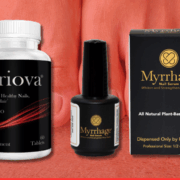
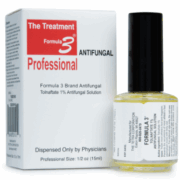
At Tetra, we develop, rigorously test, and manufacture complex, highly effective formulations (like FungiFoam® and Formula 7®) that combine powerful active ingredients with premium cosmetic vehicles. In doing so, we ensure our products are fully compliant, backed by FDA monographs, and formulated for maximum bioavailability.
The Tetra Corporation has been creating pioneering healthcare products for over three decades, helping physicians add value to their practices while improving patient outcomes. As a trusted provider of efficient and reliable treatments dispensed exclusively through medical doctors, we add both value and innovative treatment options to any practice we work with. Interested in learning more about our products? Contact us by calling customer service at 800-826-0479! You can also visit our website.